Sunday, 8 June 2014

Friends, photographers and illustrators: here's a survey that may affect your UK earnings

Apologies for the cross-post to readers of the 1709 Blog who may already have seen this, but we Artisans and Artificers have received notice of what has been described as an "independent and voluntary survey on extended collective licensing". Although it addresses what is billed as a UK development, the survey invites comments from creators of various hues from outside the UK too, since it may well have a substantial impact on their cash flow and/or rights management activities. According to the accompanying explanation:
"By October this year copyright legislation in the UK will change and authorised legal entities will be able to extend an existing collective licence so that they can license on behalf of all rights holders in the sector, except those who opt out (even if they are not members of a collecting society). This will affect any author who has made their work available online or published their work in print in the UK.

We are a group of visual creators and strategists who want to get answers on the practicalities of how an Extended Collective Licensing scheme might work for authors in particular, what it is that authors and rights owners might be opting out of and how. We want to hear, ideally on mass, from companies and individuals who will most be affected by the legislation; this includes photographers, illustrators, photo agents and representatives, publishers and broadcasters. We are especially interested in hearing for overseas artists on how UK law might affect them.

We are doing this work voluntarily and will share the information gathered from the survey with relevant parties such as rights holders (if you leave us a way to be in touch), collecting societies and associations across the globe".
Why complete the survey? The organisers of the survey explain:
"We want to give authors on mass the opportunity to have their say on ECL, what you would expect of an opt-out procedure and how you think it may affect your business and that of your photographers and illustrators in the future. We want to enable creators and government to make sound judgment based on research data". 
There are only about three months to act so, the organisers, ask, if you can think of others that might want to take part, please pass on this link: https://www.surveymonkey.com/s/ECL-Opt-out. The survey is short, easy to complete and anonymous -- though respondents can leave contact details if they choose.  The deadline for responses is 17 June at 12 pm. If you are likely to be affected by this potentially impact-making but poorly-publicised bit of copyright licensing reform, you can't lose out by expressing your opinions.

The UK's Government response to the technical consultation on draft secondary legislation for extended collective licensing (ECL) schemes (48 pages) can be accessed here.

Friday, 6 June 2014

Another Update on Detroit


The bloggers of A&A have quite diligently followed the City of Detroit's bankruptcy case, and the implications that the case may have on the collection at the Detroit Institute of Arts.  Those entries are available here, here, and here.

However, in brighter news, the city celebrated Robocop Day on June 3, and Robocop threw out the first pitch at the Detroit Tigers' baseball game that evening.  Even more exciting, the city will have its own 10-foot-tall bronze statue of Robocop.  It all started in 2011 when a fan of the movie Tweeted at the mayor suggesting that Detroit ought to have such a sculpture (since Philadelphia has a Rocky sculpture), and the mayor Tweeted back that there were no plans for a Robocop sculpture.  A local non-profit called Imagination Station then took up the cause founding a Kickstarter campaign that raised over $50,000 for creation of the sculpture.  As the Detroit Free Press reports, the molds are presently being made to cast the statue in bronze.  Final ownership of the finished statue as well as its future site remain unclear.

Wednesday, 4 June 2014

Art scam or mail fraud?

Reports this week from San Francisco that a local man has been charged with federal mail fraud in the US District Court, and is being held in prison without bail, in relation to a deal to purchase millions of dollars worth of art. 

It is claimed that Luke Brugnara, who has already spent time in prison for tax evasion and illegal trout poaching, falsely represented that he was able to purchase $11 million worth of artwork from a New York dealer. The works were then delivered to him without him having to pay a cent - apparently on the basis that he would pay for or return them within five days of receipt.

The San Francisco Chronicle details:
Brugnara made a deal in April to pay $7.3 million to an art dealer from New York for 16 paintings by Willem de Kooning, the Dutch American Abstract Expressionist artist... 
Brugnara also agreed to pay $3 million for an Edgar Degas sculpture, $450,000 for a painting by American realist artist George Luks, $160,000 for a drawing by Joan MirĂ³ and $145,000 for etchings by Pablo Picasso...  
The art dealer, who was not named in the affidavit, asked Brugnara to pay some of the money up front. Brugnara, however, said he shouldn't have to because he had previously bought a Renoir painting for $500,000 and a Picasso drawing from her without any problems...  
Brugnara told the dealer that he was opening a museum in San Francisco... When the dealer said she wasn't aware of any new museums opening in San Francisco, Brugnara told her it would actually be in Las Vegas...  
The art was shipped in crates from New York to Brugnara's home on Sea Cliff Avenue in San Francisco...  
The dealer's subsequent efforts to collect for the artwork were unsuccessful. Brugnara told his lawyer that the art was given to him as a gift and that the works were "unauthenticated and not worth much," according to an attorney representing the dealer.  
The dealer went to authorities earlier this month. 
As a non-American lawyer, it is not clear why the art dealer did not or was not required to bring a cause of action herself. Surely there was some sort of contract of sale that was breached? If only we could all have the FBI bring cases on our behalf. [But seriously, if anyone wants to enlighten us all, please do.]


Source: The San Francisco Chronicle, 30 May 2014

Friday, 30 May 2014

Detroit drama deconstructed

It's been a while since we checked in with the state of affairs in Detroit. You may remember, this time last year, we reported here and here about the city filing for bancruptcy and how there were suggestions of the Detroit Institute of Arts selling works from its collection to help pay the city's massive debt.

Despite a lot of criticism and opposition, the city's emergency financial manager, Kevyn Orr, went ahead and ordered Christie’s to appraise part of the collection, namely only artworks purchased by the city. Christie's estimated that, if sold, the works would raise between $454 million and $867 million. 

But now it is not just the city which is interested in the value of the art. Creditors of the city of Detroit have also turned their attention to the DIA collection as a source of cash. Indeed, they went so far as to file motions to allow them to remove pieces from the walls of the DIA in order to inspect and appraise them, and to access historic documents about the art, on the basis that Christie’s evaluation did not give an accurate estimate of the value of the collection

Earlier this month, the DIA were granted a bit breathing space by the Detroit court which denied these motions - reportedly telling the creditors that they could visit the museum and enjoy the art on the walls like everyone else. Although the creditors were given permission to work with DIA officials to inspect artwork which is in storage at the museum. Unfortunately, it seems that the valuation has nevertheless moved to the next level - with officials handling the bankruptcy proceedings advising the court this week that a comprehensive appraisal of the value of the collection is now underway.

Separately, the Detroit Free Press reports that: "the [DIA] moved to protect itself in court, arguing in its own filing that its artwork is legally protected from the auction block and threatened a court battle if the city pursues a sale. It said it will support the city's plan to allow the transfer of ownership of the Detroit Institute of Arts to an independent non-profit. But the museum's threat to challenge any sale in court sets up the museum as a potential obstacle for the city if the current restructuring proposal collapses."

The next major stage of this saga is the trial to determine whether the restructuring plan submitted by the city should be implemented. It is scheduled to start on 24 July.

Source: The Detroit Free Press, 15 May 2014, 27 May 2014,

Friday, 23 May 2014

Cambodia to Cleveland?

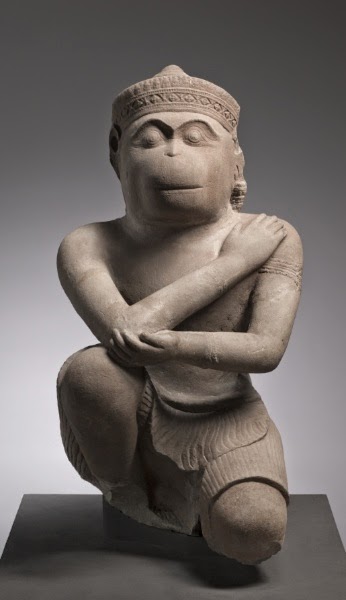
Last year saw several claims by Cambodian officials in respect of art they allege was looted from Cambodia during the Khmer Rouge regime. One of the claims was to a statue in the Cleveland Museum of Art collection, which the Cambodian cultural authorities say was looted from Prasat Chen, a 1000-year-old temple about 75 miles northeast of the better known Angkor Wat.


This month, the Cleveland Museum announced that after lengthy investigations they have determined that the statue is not from from Prasat Chen.

The Plain Dealer reports:
During the winter, the museum sent curator Sonya Rhie Quintanilla to Prasat Chen, a site of temple ruins 180 miles northwest of Phnom Penh.  
Based on her research, the museum said it has ruled out Prasat Chen as the sculpture's original location, although it said it could not rule out the possibility that it may been removed illegally from some other site.  
To check whether the work came from Prasat Chen, Quintanilla, the museum's curator of Indian and Southeast Asian art, carried in her luggage a lightweight plastic resin facsimile of the base of the Cleveland sculpture.  
When she reached the site, where a thousand-year-old temple features sculptures that narrate Hindu legends, she said she found that the facsimile did not fit the two spots where the museum's Hanuman sculpture logically might have been located.
While perhaps some kudos to the museum for doing some homework, is it really sufficient to say that the statue was not looted because it doesn't fit onto a particular base? I would have expected the museum to concentrate on proving the statue's provenance by reference to its ownership history. Who sold it to the museum? What background checks were performed? etc.

And, granted, the museum is said to be looking into this too. Nevertheless, it seems a bit premature to say the statue is not from Cambodia based on....essentially...a base.


Source: The New York Times, 20 May 2013, The Plain Dealer, 13 May 2014

Thursday, 22 May 2014

Dutch collections include art looted during World War II

It has been reported that the art collections of the Palace Het Loo, the Rijksmuseum and three other museums are thought to include pieces and artifacts that were looted from a Jewish family during World War II.

The NL Times explains that:
In total, 15 pieces of a valuable Meissen porcelain dinnerware ware set may have been stolen from the Gutmann family. The items may have been put up for auction in 1934 under coercion from the Nazis.

Now, 80 years after the fact, Amsterdam investigation bureau Artiaz was able to trace the pieces, to the museums...
Artiaz traced the dinnerware set pieces by looking through old auction documents... 
The items are part of a unique 435-piece Meissen dinnerware set depicting village scenes, which was given to Willem V around 1774 as a gift from the United East-Indian Company. The prince sold the set during exile in England.
Artiaz also said that it was controversial that the Ekkart Committee, which was appointed on 1 April 1999 to supervise the provenance research carried out on works of art confiscated during World War II and repatriated to Holland from Germany after the war (the "NK Collection"), failed to identify that the pieces had been looted. However, with the continual stream of new claims over artworks which were stolen from Jewish families during World War II, perhaps this is the least surprising aspect of the story.

Source: NL Times, 14 May 2014.

Wednesday, 21 May 2014

Not an easy snatch and grab

A thief managed to make off with a piece of a copper sculpture as it was being installed in a New York park.

The piece was part of an exhibition of Vietnamese artist Danh Vo's work "We the People", organised by the Public Art Fund. We the People is a life-size replica of FrĂ©dĂ©ric Auguste Bartholdi’s Statue of Liberty, recreated by Danh Vo in about 250 individual pieces.
One part of We the People
MyFoxNY reports that the robbery took place last week in City Hall Park - one of the locations of the exhibition, which was due to open on 17 May. The piece taken was a large, chain link section made of copper resembling a portion of the Statue of Liberty's foot. It is said to weigh about 40lbs and be worth about $6,000.

It does not appear that the theft has impacted on the opening of the exhibition, which can now be seen in both City Hall Park and Brooklyn Bridge Park. The police are investigating.

More details on the exhibition can be found here.

Tuesday, 20 May 2014

“The Intersection of Art and Law": symposium ahead!

It's magnificent -- but
is it art?
The John Marshall Law School Review of Intellectual Property Law (RIPL) has chosen for its sixth annual symposium on 24 October 2014 the theme of “Art Meets Law: The Intersection of Art and Law”. Right now, RIPL is soliciting proposals for papers which will be published in its 2015 Symposium issue.

If this takes your fancy, you'd better not delay. Proposals must be received by 15 June 2014 to Symposium Editor Amy Taylor at ataylor02@law.jmls.edu, in Word or text file, double-spaced, in 12 point font. Accepted papers will be published and authors may be invited to present their works at the Symposium.

Rothko Restored!


Some months ago I wrote an entry regarding Art Attacks.  For lack of another term of art, an "art attack" is when a famous work of art is defaced or otherwise attacked by another artist--the act of the attack or the resulting "new" work being considered art by the attacker.  One such incident occurred late in 2012 when Mark Rothko's painting Black on Maroon was written on in graffiti pen at the Tate Modern.  After 18 months of work by conservators, the painting has been restored and is now available for viewing at the museum.  Phaidon provides an absolutely fascinating look behind the scenes at what it took to restore the piece.  While Black on Maroon is now considered back to its original condition, the implication of the attack and ensuing restoration on the painting's value is estimated to be a £5 million loss, though the Tate indicates it has no intent to sell the piece.  I certainly hope our London-based readers will take the opportunity to go view this brilliantly restored work in person.


Thursday, 8 May 2014

Gurlitt dies, hoarded art works remain

Earlier this week the BBC reported the death of Cornelius Gurlitt, the German art hoarder.

A beach scene by German impressionist Max
Liebermann was one of the important discoveries
At presents, says the BBC, there is no definitive answer on what will happen to Gurlitt's secret collection, which included many Nazi-looted pieces. More than 1,400 works were found in his Munich apartment, including pieces by Picasso and Matisse. Many were feared lost or destroyed before tax investigators uncovered his priceless collection in 2012.

Gurlitt, the son of Adolf Hitler's art dealer Hildebrand Gurlitt, was ordered to deal in works that had been seized from Jews, or which the Nazis considered "degenerate" and which had been removed from German museums. After initially refusing to cooperate with the authorities, he agreed to return works if it could be proved that they had been stolen.

Presumably an ancillary question remains as to the copyright in these works and as to who might be entitled to any proceeds of sale in respect of their commercial exploitation, a matter on which we can at present only speculate.