Showing posts with label Cambodia. Show all posts

Friday, 23 May 2014

Cambodia to Cleveland?

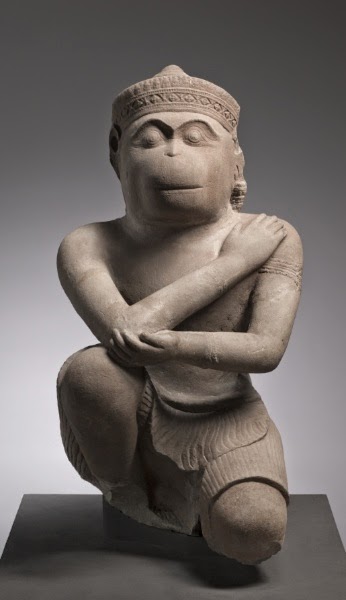
Last year saw several claims by Cambodian officials in respect of art they allege was looted from Cambodia during the Khmer Rouge regime. One of the claims was to a statue in the Cleveland Museum of Art collection, which the Cambodian cultural authorities say was looted from Prasat Chen, a 1000-year-old temple about 75 miles northeast of the better known Angkor Wat.


This month, the Cleveland Museum announced that after lengthy investigations they have determined that the statue is not from from Prasat Chen.

The Plain Dealer reports:
During the winter, the museum sent curator Sonya Rhie Quintanilla to Prasat Chen, a site of temple ruins 180 miles northwest of Phnom Penh.  
Based on her research, the museum said it has ruled out Prasat Chen as the sculpture's original location, although it said it could not rule out the possibility that it may been removed illegally from some other site.  
To check whether the work came from Prasat Chen, Quintanilla, the museum's curator of Indian and Southeast Asian art, carried in her luggage a lightweight plastic resin facsimile of the base of the Cleveland sculpture.  
When she reached the site, where a thousand-year-old temple features sculptures that narrate Hindu legends, she said she found that the facsimile did not fit the two spots where the museum's Hanuman sculpture logically might have been located.
While perhaps some kudos to the museum for doing some homework, is it really sufficient to say that the statue was not looted because it doesn't fit onto a particular base? I would have expected the museum to concentrate on proving the statue's provenance by reference to its ownership history. Who sold it to the museum? What background checks were performed? etc.

And, granted, the museum is said to be looking into this too. Nevertheless, it seems a bit premature to say the statue is not from Cambodia based on....essentially...a base.


Source: The New York Times, 20 May 2013, The Plain Dealer, 13 May 2014

Wednesday, 18 September 2013

Sotheby's battles US Government over Cambodian statue

Another update, this time to the Cambodian art dispute reported here.

By way of reminder, in August 2011, the US government intervened in a claim by the Cambodian government in respect of an ancient sandstone statue that was listed for auction by Sotheby's. Sotheby's then withdrew the statue from sale.

In a latest development, both sides to the dispute have filed motions with the US District Court in Manhattan accusing the other of unethical behaviour.

On it's side, Sotheby’s is accusing the US government of intervening in their negotiations to sell the statue in a private deal which would have allowed for the return of the statue to Cambodia. Their claim is that the government blocked the deal as it wanted all the credit for the statue's return.

Meanwhile, the prosecutors have accused one of their former colleagues,  Jane A. Levine, who now works for Sotheby's, of providing them with “false and misleading information” in relation to the statue.

Sotheby's, additionally, filed further evidence disputing the ability of the US government to bring the case, and asked the judge to defer the further exchange of discovery until the court has ruled on on its motion to dismiss the case.

The court has set the next hearing for 14 October.

Source: The New York Times, 13 September 2013

Thursday, 30 August 2012

Cambodian art dispute

Last week saw the latest step in an art dispute between Cambodia and Sotheby's.

The dispute concerns a 10th century sandstone statue. Sotheby's listed the statue for auction on 24 March 2011.


The press release noted that the auction of Indian & Southeast Asian Works would "be led by a spectacular 10th century Khmer Koh Ker period Athlete from a European private collection (est. $2/3 million). Acquired by the original owner over 40 years ago, the figure is mate to the Koh Ker athlete at the Norton Simon Museum in Pasadena that is almost identical in posture and physical appearance." Indeed, it is reported that in 2007, archaeologists were able to match the statue to its pedestal at a temple site in Koh Ker, a temple complex 60 miles northeast of the more well-known Angkor Wat.

At the last minute, however, the statue was removed from the auction following a claim from the Cambodian government that it had been illegally removed from Cambodia during the reign of the Khmer Rouge and should be returned to the country. Subsequently, following a request from Cambodia, US federal prosecutors filed a forfeiture claim on Cambodia's behalf. Then, in June of this year, Sotheby’s filed an unsuccessful motion to dismiss the claim on the grounds that there was no evidence that the statue had been stolen from Cambodia.

Most recently, on 21 August 2012, evidence was filed that accused Sotheby’s of knowing that the sculpture had been stolen from Cambodia when it put the work up for auction in March 2011. In this respect, the New York Times reports that:
"In their new filing, the prosecutors included statements from two heritage law experts who said that, under Cambodian and British law, the statue should be treated as stolen property.
One expert, Matthew Rendall, said the statue is covered under Cambodian statutes, royal orders and decrees dating to the early 1900s that declare such items to be the “exclusive” and “immovable” property of the government. Mr. Rendall noted five occasions between 1985 and 1997 when Sotheby’s returned sculptures to Cambodia after claims they had been looted sometime after 1970.
Sotheby’s says the sculpture could have been spirited away any time during its thousand-year history and was bought in good faith by the husband of its current owner in 1975 from a London dealer.
Experts cited by the United States and Cambodian governments insist the statue was removed more recently. The say it was too remotely located and too heavy – more than 600 pounds — to have been carried off until adequate roads were built into the region sometime after 1960."
Disputes over ownership of looted artworks are not new. However, the decisions do go either way. It remains to be seen whether the statue will be returned to Cambodia. If it can be shown that Sotheby's knew that the statue was stolen, there is a good chance that the US attorney's claim will be successful. But, it is unlikely to be very easy to prove Sotheby's knowledge. Perhaps a better standard, in any case, is whether Sotheby's ought to have known. As one of the world's largest art auctioneers, it is difficult to believe that Sotheby's did not question the origin of the statue when it was offered to them for sale.

Source: The New York Times, 21 August 2012