Showing posts with label Artwork. Show all posts

Monday, 18 May 2015

Romero Britto sues Apple over copyright infringement

Apple was recently sued by the Pop artist Romero Britto over its "Start something new" campaign for using an artwork from the design duo Craig & Karl, that allegedly copies the design style which Britto is famous for. 

A screenshot of Apple's website of the "Start something new" campaign

Britto became aware of the copycat art when Apple launched its worldwide promotional campaign, but he discovered that the two artists had been systematically making art similar to his own for years.


Excerpt of the comparison offered in Britto's complaint


Britto is a Miami-based pop artist, internationally well-known, who works with several brands on advertising campaigns, using bright colours, strong lines and simple designs. According to his complaint, Britto's specific trade dress is "strong, fanciful, non-functional, and inherently distinctive. In addition, the Britto Trade Dress has acquired distinctiveness as a result of uninterrupted promotion and sale of Britto brand products and services".    

The lawsuit was recently filed in the US District Court, Southern District of Florida, against Apple and the graphic design duo for trade dress infringement, trade dress dilution, as well as unfair competition and copyright infringement.

Britto accused the two artists of violating the Britto trade dress and Apple for commercially exploiting the allegedly infringing image. Indeed, Apple uses Craig & Karl's image – representing a patchwork hand on a bright yellow background on one of its iPads in the graphics – to promote its new advertising campaign, describing how this image was realized on iPad Air 2 using IOS apps.

Further to Apple's massive advertising campaign and to the use of Craig & Karl's image in retail stores, many people contacted Britto under the false impression that he had created the infringing artwork. Britto received many incorrect congratulations on his new deal with Apple, as well as messages of dismay from business partners, and inquiries from collectors wanting to know if the image displayed in the Apple stores or on the Apple website came from him.

Britto contacted Apple asking the company to cease using the infringing image, but he did not receive a response. Therefore, he decided to file a lawsuit, asking for an injunction preventing Apple from using the infringing artwork and Craig & Karl from producing or using other copycat artworks, along with damages and attorneys' fees. 


Friday, 18 October 2013

Monet at centre of conspiracy trial

One of the Monet water-lily paintings is central to the trial of Vilma Bautista, ex-assistant to former first lady of the Philippines, Imelda Marcos.

Bautista was reportedly indicted in New York last year on charges that include conspiracy, tax fraud, illegally selling the Monet painting, Le Bassin aux Nymphease, as well as trying to sell other valuable paintings.


The Huffpost explains:
The artwork vanished amid Ferdinand Marcos' 1986 ouster, ended up in Bautista's hands and is part of a multibillion-dollar roster of property the Philippines claims the Marcoses acquired with the nation's cash, prosecutors said. 
But for all the art-world intricacies and Philippine politics, "at bottom, this case is really quite simple — it's about greed and fraud," Manhattan Assistant District Attorney Garrett Lynch told jurors in an opening statement. 
The defense said Bautista believed that Imelda Marcos rightfully owned the paintings and that Bautista had authority to sell them for her. Bautista is just an intermediary who got caught up in a decades-long dispute between a nation and its former leader, attorney Susan Hoffinger said.  
"That battle doesn't belong here" in a Manhattan criminal courtroom, Hoffinger said in her opening.
This will be an interesting case to follow.

Source: HuffPost, 16 October 2013

Thursday, 12 September 2013

Artist faces child pornography charges

The recent federal elections may have overshadowed this latest art news out of Australia.

Australian artist, Paul Yore, was charged last week with producing and possessing child pornography. The charges were laid following the seizure by Victorian police of pieces of his art back in June of this year. The artworks were from one of his installations called "Everything's F..ked" - which was on display at a Melbourne gallery at that time.

One of Yore's allegedly pornographic pieces

The case is scheduled to be heard in the Melbourne Magistrates Court in November. If it goes to trial, it is likely to be a landmark case on the censorship of art.

Source: The Australian, 7 September 2013

Thursday, 14 March 2013

More UK tax breaks

Last month I reported on the UK government's 'acceptance in lieu' (AiL) scheme.

This week, the Department for Culture, Media and Sport (DCMS) launched the "Cultural Gifts Scheme." The Scheme, which will be administered by the Arts Council, will allow UK taxpayers who own art or collections of heritage objects, which are considered to be pre-eminent, to be donated during their lifetime (rather than after their death, as with the AiL scheme) in return for a tax reduction to their tax liability.

Culture Minister Ed Vaizey has said of the scheme that it "is aimed at encouraging gifts and donations of wonderful treasures to the nation, where they can be enjoyed by all."

How will it work?

A UK taxpayer who owns an artwork which is considered pre-eminent, can offer to donate the work to the Arts Council. The offer will be considered by the AiL Panel (the “Panel”). If the Panel considers that the object is pre-eminent and meets the relevant conditions, they will agree a valuation and then make a recommendation to the relevant Minister (either the Secretary of State for Culture, Media and Sport, the Welsh Ministers, the Scottish Ministers or the Northern Ireland Department for Culture, Arts and Leisure). If the relevant Minister agrees with the recommendation, the object will then be allocated by the appropriate Minister to an eligible museum or gallery. Alternatively, where an offer is made with a wish that the artwork be allocated to a particular institution, the Minister can agreed to the allocation and the object will be transferred to that institution. If the Panel assesses an object as not being pre-eminent, it will be rejected. There will also be an annual limit of £30 million for both the Cultural Gifts Scheme and AiL Scheme. The Panel may also reject a donation where acceptance would cause the annual limit to be exceeded.

Upon formal acceptance of a donation, the Arts Council will send confirmation of the donation to HMRC. HMRC will not apply the tax reduction to a person’s tax liability unless and until the Panel has confirmed to HMRC that the relevant conditions for the tax reduction have been met. The tax reduction will only be available against the income tax and capital gains tax liabilities of individual donors or against the corporation tax liability (including liabilities on chargeable gains) of corporate donors.

DCMS have produced detailed practical guidance on how to make an application under the Cultural Gifts Scheme. This can be found here.

Saturday, 8 September 2012

The Stripper and the Taxman: Sexy, but is it Art?


A New York strip club is making headlines with a valiant attempt to avoid paying a rather large tax bill.

The club, named Nite Moves, advertises itself as 'the only gentleman's club in Albany with fully nude private dancers' and is being charged back taxes of between US$125,000 and US$400,000 according to differing sources. But it argued in court this week that its dancers' performances are an art form, and as such the club should be tax exempt. New York state law does indeed exempt revenue from 'dramatical [and] musical arts performances' from tax. But does lap- and pole-dancing qualify?

Nite Moves' attorney, adult industry specialist Andrew McCullough, presented a spirited argument in court that it does. 'It's not the Bolshoi [ballet], but it's good,' he said in praise of the club's dancers, going on to point out that pole dancing is under consideration as an Olympic sport. The judge appeared to disagree; the Associated Press reported him as commenting that the dancers are hired untrained and simply 'do what they do'. State law adds that exotic dancing does not qualify as an arts performance because it is not firmly choreographed.

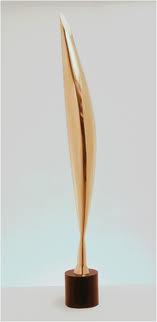
The law, when asked to define art (often for tax purposes), frequently struggles and sometimes finds itself behind the times. Famously, when Brancusi's bronze Bird in Space was imported into the USA in 1928, it was initially deemed not an artwork but a utilitarian object and 40% import duty was charged on the value of the bronze. As a sculpture it could have been freely imported. However, 'sculpture' was defined for import purposes as representing something real, while Bird in Space was abstract: it didn't actually look like a bird. More recently the EU has held that full VAT (rather than the reduced rate for artworks) was chargeable on works by Dan Flavin and Bill Viola when they were imported into the UK. As the pieces' components were light bulbs, video equipment and other such materials, the EU felt they couldn't be deemed 'art'.

Brancusi's Bird in Space
The arguments raised on both sides in the Nite Moves case as to why exotic dancing is or is not 'art' are illustrative of the difficulties faced when making such a decision; some of them seem only tenuously linked to the question in hand. Why should the fact that the club's dancers are hired untrained, or that pole dancing may become an Olympic sport, make their dancing any more or less an art form? Is a painter less an 'artist' because he or she has not been formally trained? Or is the 100 metre sprint an art form because it's an Olympic sport? Again, is lap dancing less an art form because it may also be considered erotic? On this last point it's interesting to recall that ballet, once considered a dubious profession, today enjoys unassailable status as highbrow art.

The court in the Nite Moves case does not have an enviable task in trying to answer the unanswerable question: What is art? So far as exotic dancing goes, the jury is still out. A decision is expected next month.

Read more in the Huffington Post, the Telegraph and the BBC News.

Friday, 10 August 2012

Skilled in the art: legal answers to questions of authenticity

An interesting issue which has been flagged by the press recently is whether the courts are qualified to make judgments as to the authenticity of artworks.

Reports the New York Times:
Federal District Court Judge Paul G. Gardephe’s résumé includes many impressive accomplishments but not an art history degree. Nonetheless he has been asked to answer a question on which even pre-eminent art experts cannot agree: Are three reputed masterworks of Modernism genuine or fake.

Judge Gardephe’s situation is not unique. Although there are no statistics on whether such cases are increasing, lawyers agree that as art prices rise, so does the temptation to turn to the courts to settle disputes over authenticity. One result is that judges and juries with no background in art can frequently be asked to arbitrate among experts who have devoted their lives to parsing a brush stroke.

The three art cases on Judge Gardephe’s docket in Manhattan were brought by patrons of the now-defunct Knoedler & Company who charge that the Upper East Side gallery and its former president Ann Freedman duped them into spending millions of dollars on forgeries.

The judge’s rulings may ultimately rely more on the intricacies of contract law than on determinations of authenticity. But the defendants and plaintiffs are busily assembling impressive rosters of artistic and forensic experts who hope to convince the judge that the works — purportedly by Jackson Pollock, Willem de Kooning and Mark Rothko — are clearly originals or obvious fakes.

Of course judges and juries routinely decide between competing experts. As Ronald D. Spencer, an art law specialist, put it, “A judge will rule on medical malpractice even if he doesn’t know how to take out a gallstone.” When it comes to questions of authenticity, however, lawyers note that the courts and the art world weigh evidence differently.

Judges and juries have been thrust into the role of courtroom connoisseur. Legal experts say that, in general, litigants seek a ruling from the bench when the arguments primarily concern matters of law; juries are more apt to be requested when facts are in dispute.
 The problem is that ultimately it may not matter what the judge or jury decides. In reality, if the art experts declare that a work is fake, a legal pronouncement is likely to have little effect – the market will heed the experts.

http://graphics8.nytimes.com/images/2012/08/06/arts/jpjudges/jpjudges-articleLarge.jpg
One of the paintings, attibuted to Jackson Pollock,
 in respect of which Judge Gardephe will be required to rule


Source: New York Times, 5 August 2012

Tuesday, 24 July 2012

New Australian art law?

If the latest art news from Australia is anything to go by, it seems that new legislation may shortly be introduced to protect international artworks which have been loaned to Australian galleries from seizure in the event of an ownership dispute.

The Sydney Morning Herald reports:

...[T]he Arts Minister, Simon Crean, said yesterday: ''The new legislation will guarantee the return to the lender of cultural objects such as paintings, drawings, sculptures, textiles, stamps and coins, which are brought to Australia on loan for temporary public exhibition.''
Without it, he said, Australians might have been denied the opportunity to see masterpieces such as those on loan from the Prado in Madrid to the Queensland Art Gallery.
The lack of such laws has been cited by Australian collecting institutions as a barrier to negotiating loans where there is the potential for dispute about a work's ownership or ethics of acquisition.
Antiquities, indigenous artefacts and works expropriated from Jewish citizens by the Nazis, or from Russian owners by the Soviets, are among those that have become the subject of disputes internationally.
The new legislation, to be passed in the spring session of Parliament, will ''ensure that any [such] loans from overseas collections will be co-ordinated in consultation with Aboriginal and Torres Strait Islander people'', Mr Crean said.
If there really has been a barrier to international art coming into Australia due to inadequate legal standards, the proposed legislation may be a welcomed change. It remains to be seen whether such a change will actually make a difference to Australian galleries.
Les baigneuses by Pablo Picasso - exhibited in
the Art Gallery of New South Wales
between 12 Nov 2011 - 25 Mar 2012
 on loan from the Musée National Picasso, Paris

Source: Sydney Morning Herald, 21 July 2012

Thursday, 7 June 2012

Goodbye Section 52? Proposed copyright extension for industrially produced designs

The iconic Eames chair
will it soon be protected by copyright?
What is art? What is design? Are the two different? Where is the overlap?

These are important and difficult questions which have plagued lawyers, judges and legislators in many jurisdictions not least the United Kingdom. There is currently a Bill passing through the UK parliament which will shake up the current UK approach to copyright for some designs and brings the UK system more in line with the approach taken in the rest of Europe.

Currently section 52 of the Copyright Designs and Patents Act 1988 (CDPA) limits the effective term* of copyright protection to ‘the end of the period of 25 years from the end of the calendar year in which such articles are first marketed’. This limited 25 year copyright term applies where an artistic work has been exploited (by the copyright owner) by making the artistic work by an ‘industrial process’ and marketing the artistic work in the UK or elsewhere.

A number of the gaping holes in section 52 were filled by the snappily titled Copyright (Industrial Process and Excluded Articles)(No. 2) Order 1989. This clarified that an ‘industrial process’ means either (1) the artistic work is manufactured more than 50 times or (2) it consists of ‘goods manufactured in lengths or pieces, not being hand-made goods’. So most furniture, lamps, storm trooper helmets etc are out unless...

...even if made by an industrial process, some items can slip through the section 52 net and get the full copyright term of protection. These special items are: works of sculpture, wall plaques, medals and medallions or printed matter primarily of a literary or artistic character. Unsurprisingly most of the legal battles have been over whether a particular design is a ‘sculpture’. But such battles may no longer be necessary.

[* Technically, the copyright term is not limited but the ability to take action against infringers is removed which is effectively the same thing subject to limited circumstances which are discussed in more detail here.]

The plan is simple: revoke section 52 (see clause 55 of the proposed bill).

How will this work in practice?

In particular what will happen to works which were out of copyright protection is not clear from the bill. There are likely to be some transitional provisions and these works will ultimately be protected by the copyright regime.

Who benefits?

To qualify for the extended term of protection, a work must be artistic in the first place. There is a lot of talk about how British designers will benefit but this will not apply across the board. Some designs may not qualify as not all designs are necessarily artistic. The definition of art in the CDPA is fairly broad but nevertheless restricted to more traditional notions of art. The area most of these items are likely to fall within is a "work of artistic craftsmanship" which unlike paintings etc is not explicitly a work “irrespective of artistic quality”.

Some designs have become iconic over time but were not necessarily always recognised as artistic. The definition of what is artistic has always involved a great deal of subjectivity and unfortunately judicial rulings on what is art may be unavoidable. There are problems and not everyone will benefit. Nevertheless, if the bill is passed it will be another item in the designer’s IP arsenal. Whilst it may not be the huge boost to British business that it is hyped up to be, it will put the UK on a more equal footing with the rest of Europe.

The people who lose out are those that manufacture ‘replicas’. They can choose to move sufficiently far away from the original to not be copying a ‘substantial part’ (a risky strategy) or take advantage of the transitional provisions to sell off existing stock and move business operations to Estonia or Romania (the only other two EU countries to restrict the term of protection for designs).


Is it necessary?


Do we really need more copyright protection? This is a complicated question but there has been a significant disparity in the protection afforded to designers and musicians, writers etc and no real justification for such a major difference in approach. The change may be good for British industry and it will definitely keep some British lawyers busy. Quite apart from subsistence and infringement issues, there are going to be questions over ownership; if the bill is passed those designers who were commissioned (rather than employed) will suddenly own the resurrected copyright in design – not the company which is exploiting the rights and may have to negotiate an expensive licence.

You can track the passage of the bill here.

Thursday, 20 January 2011

Rubens Causes More Controversy as Artwork Owned by A Victim of the Nazis to Remain in Britain


Following on from my earlier post, it seems that Rubens was causing a stir before Christmas too.

His work entitled The Coronation of the Virgin, an oil sketch measuring 46cm x 61.4cm, was painted in or around 1613. While the painting is one of Rubens's lesser known works, it is considered important as it is part of a group of oil sketches by the German-born artist made in preparation for a series of larger paintings that decorated the ceiling of a Jesuit church in Antwerp destroyed by fire in the 18th century.

15 December 2010, after dispute between the Courtauld Institute and the family of its original owner, Parliament's Spoliation Advisory Panel ruled in favour of Courtauld Institute and as a result the historically important painting of the Virgin Mary stay in Britain. The full report of the Panel can be found here. Last year another painting formerly owned by the Jewish banker, Hans Makart's The Death of Pappenheim, was returned to the same family by a decision of Vienna Municipal Council.

The Spoliation Advisory Panel, chaired by Sir David Hirst, was established in February 2000 by the Department for Culture, Media and Sport as an advisory non-departmental public body (NDPB) to help resolve claims for cultural property looted during the Nazi era. On 12 April 2010 the Panel was dissolved as an advisory NDPB and reconstituted as a group of expert advisers which continues under the name 'Spoliation Advisory Panel'. Sir David Hirst continues to be chairman, the Panel's membership remains as before and the Panel remains the advisory body designated by the Secretary of State under Section 3 of the Holocaust (Return of Cultural Objects) Act 2009.

The Panel resolves claims from people, or their heirs, who lost property during the Nazi era, which is now held in UK national collections. The Panel is appointed by the Secretary of State. It considers both legal and non-legal obligations, such as the moral strength of the claimant’s case, and whether any moral obligation rests on the holding institution.

The painting came to Britain after it was acquired at auction at Sotheby's by a noted collector, Count Antoine Seilern, who bequeathed it to the Courtauld Institute in 1978. The painting’s original owner was Jewish Banker Herbert Gutmann, the Director of the Dresdner bank until 1931 and son its founder. Gutmann himself was a collector of Islamic, European and decorative arts. After his father died he was appointed the director of Dresdner Bank until 1931 when he stepped down in the wake of the German banking crisis. Having sold his art collection in Berlin in April 1934, he fled Nazi Germany for the UK in October 1936. He died here six years later. His brother and his wife, who remained in Germany, were murdered by the Nazis. Gutmann's remaining assets were seized by the Nazis in 1940.

Gutmann, described by a propaganda poster as a "profiteer and a Jewish manipulator" was feared by Hitler as someone, along with his contemporaries, who might support a coup against him. Indeed in 1934, together with other members of centrist and right-wing parties, several of Gutmann's contemporaries were murdered on the orders of Hitler. Gutmann’s descendants maintained that he was forced to sell the painting in haste before the Nazis seized the collection and because he was forced to flee Nazi Germany and as such the Courtauld was obliged to return the work.

Central to the row over ownership was whether Gutmann had been forced to sell the painting because of antisemitism. The panel heard evidence that Dresdner Bank became "Nazified" and was encouraged to persecute Jewish employees. The panel report notes: "While there is no documentary record of Gutmann having owed any money to the Dresdner Bank before 1933, documents start recording money owed by Gutmann from this point onwards, beginning with a debt, reported in July 1933, of 200,000 reichsmarks owed to a Dresdner Bank share syndicate set up in 1927, in which Gutmann was a participant."

The panel also heard Gutmann’s wealth was eroded after unsuccessful investments in Egyptian cotton and that Gutmann sold his art collection as a “cold financial calculation” because of these financial losses, rather than due to anti-Semitism. The panel agreed with his and saw no grounds for criticism of the Courtauld. In their final conclusion considered the moral strength of the Claimants’ case insufficient to warrant a recommendation that The Coronation of the Virgin should be transferred to them or that an ex gratia payment should be made to them.

Original Source: http://www.culture.gov.uk and http://www.guardian.co.uk

Wednesday, 19 January 2011

Woman in Sombre Travelling Cloak Detained in the UK

Culture Minister Ed Vaizey yesterday placed a temporary export bar on Portrait of a Young Woman, said to be by artist Peter Paul Rubens, providing a last chance to raise enough money to keep the painting in the United Kingdom. The Minister’s ruling follows a recommendation by the Reviewing Committee on the Export of Works of Art and Objects of Cultural Interest, administered by the Museums, Libraries and Archives Council (MLA). The Committee recommended that the export decision be deferred on the grounds that the painting is of outstanding aesthetic importance and of outstanding significance for the study of early 17th Century portraiture.


The Reviewing Committee on the Export of Works of Art and Objects of Cultural Interest is an independent body, serviced by MLA, which advises the Secretary of State for Culture, Media and Sport on whether a cultural object, intended for export, is of national importance under specified criteria. Where the Committee finds that an object meets one or more of the criteria, it will normally recommend that the decision on the export licence application should be deferred for a specified period. An offer may then be made from within the United Kingdom at or above the recommended price.

The painting, which dates from c. 1602-04, depicts a woman in a sombre travelling cloak, embellished with elaborate lacework and expensive jewellery. Her identity is unknown, but she was clearly an individual of high status. The costume itself is Spanish but does not necessarily locate the painting in Spain, since some Italian courts at that time adopted the Spanish style of dress. It is possible that the painting was commissioned by Vincenzo Gonzaga, Duke of Mantua, for his “Gallery of Beauties”. The woman gazes straight out of the canvas and there is a sense of a strong bond between viewer and sitter that gives the portrait a powerful impact.

Lord Inglewood, Chairman of the Reviewing Committee, said: “This is a striking portrait of a very real, although unidentified, woman. There are some bravura areas of painting, especially in the face and hand. It is an important work for study as although its attribution to Rubens is debated it is an outstanding example of portraiture in Southern Europe from the beginning of the 17th Century."

The decision on the export licence application for the painting will be deferred until 17th March 2011 and may be extended until 17 May 2011 inclusive if a serious intention to raise funds to purchase the painting at the recommended price of £1m is expressed. So if you have a spare £1m lying about, now is the time to make an offer.

Original Source: http://www.culture.gov.uk/news/media_releases/7719.aspx