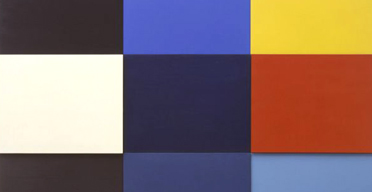
Méditerannée, 1952 - Ellsworth Kelly

While flipping through the pages of Vogue's latest U.S. issue, I came upon an article about two dresses designed by world-renowned painter Ellsworth Kelly. The New York Times also features an
informative piece on the the Kelly dresses. As clothing, or as a artwork, I think they are fantastic, and it's also a great opportunity to blog about legal protection in fashion, a topic I just spoke on last week. The new dress, designed by Kelly and created by Francisco Costa of Calvin Klein is basically a remake of a dress that Kelly originally designed in France in 1952. Kelly's original dress was made using brightly colored cotton that he purchased in the South of France. Kelly used some fabric for a five-panel painting in cloth. He gave the remaining fabric to a friend, Anne Weber, asking her to make the dress to his specifications (although in the end he was very bothered that she left the bottom blue panel so long). The dresses feature color blocks that evoke Kelly's paintings.
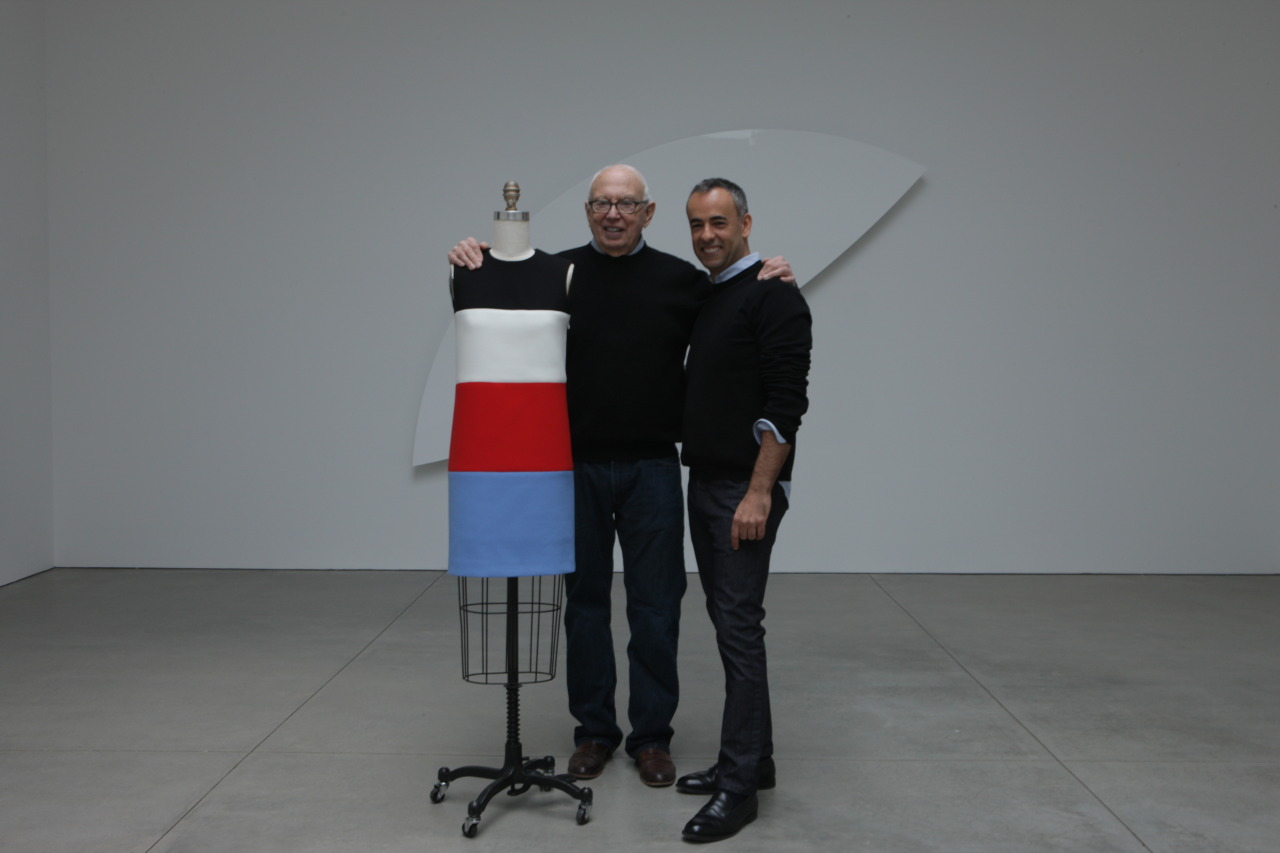
One dress, created in France, and another (presumably) created in the U.S., receive different intellectual property protection. Clothing designs are allowed far greater intellectual property rights in Europe. At this point there are two layers of protection, that offered by individual nations and that offered by the EU Directive on Legal Protections in Design. In France, where the first dress was made, fashion designs are classified as "works of the mind" and enjoy copyright protection.
In the U.S., clothing design receives almost no protection under copyright law because clothing is considered largely inseparable from its utilitarian functions. U.S. copyright law, loath to protect to utilitarian items therefore only protects things likes original designs on fabric, or possibly non-utilitarin features of costumes. While some designers are able to bootstrap their way into some level of protection through trademark and trade dress, clothing is largely unprotected and copycats are free to infringe upon new designs.
Only ten of the new Kelly dresses were made. One was donated to the Metropolitan Museum of Art's Costume Institute, another to the Philadelphia Museum of Art. With dresses and other clothing items gracing the galleries of some of the nation's premier museums, one would think the U.S. might start seeing fashion a little differently, but the fight to obtain greater intellectual property protection in the United States has been going on for over 100 years. For the last twenty years, congressional bills seeking to extend some level of limited copyright protection to clothing have regularly been introduced and consistently died in committee, so it does not appear that change is coming any time soon.
Some have remarked that the dresses are so reminiscent of Kelly's paintings, that they really constitute drawings or sculptures, not just ordinary clothing. Although it might be impractical, I can't help but wonder if these musings could represent an alternative theory for copyright protection of the Kelly dresses in the United States.