Showing posts with label design. Show all posts

Tuesday, 18 August 2015

The Art of Protecting Design

We are lucky to have another guest post from the wonderful Molly Torsen Stech: Knowing that other attorneys gracefully bridge the different bodies of intellectual property law more often than I, I recently found a post on the 1709 Blog very interesting; it considered the various ways in which interior design might be protected by intellectual property laws. In particular, it considered copyright, design rights, and trademark rights; and it generated some interesting comments.

Of course, “interior design” can comprise a wide array of meanings. Is it the totality of the look and feel of a single room in a home or is it a hotel’s overarching color scheme and atmosphere, complete with floral arrangements, wallpaper, and furniture style and placement that comprise interior design? Given that Serbia has recently amended its design law, Israel is considering a new design law, the European Commission may publish the results of an evaluation of the legal and economic aspects of its design protection in early 2016, and given the fascinating designs on view at the ongoing Expo in one of my favorite cities, some esoteric musings on the nexus of IP laws are perhaps warranted.

In struggling to understand the term “interior design,” it is also useful to spend some time parsing the term “industrial design” (and even just “design”), in an effort to understand how to differentiate design from art; and art from commercial identification, and so on. Needless to say, none of this is straightforward. As McKenna and Strandburg note, “[p]roduct design lies at the intersection of the patent, copyright, and trademark regimes. Useful articles often have both utilitarian and aesthetic aspects, and at times their features serve as source identifiers in the marketplace.” The United States handles these amorphous questions under copyright law, design patent law, and/or sometimes trademark (trade dress) law.

Unlike the European Union, and other intellectual property regimes, it does not have a sui generis design law under which to protect designs specifically, although the United States did recently implement the procedure-oriented and WIPO-administered Hague Agreement Concerning the International Registration of Industrial Designs. Given the nearly undefinable nature of “design,” and the often patentable or copyrightable objects to which design is affixed or in which it is embedded, it is of course arguable whether a domestic sui generis design law is helpful. The United States Patent and Trademark Office, in its definition of “design,” through the lens of design patents, notes:
Since a design is manifested in appearance, the subject matter of a design patent application may relate to the configuration or shape of an article, to the surface ornamentation applied to an article, or to the combination of configuration and surface ornamentation. Design is inseparable from the article to which it is applied and cannot exist alone merely as a scheme of surface ornamentation. It must be a definite, preconceived thing, capable of reproduction and not merely the chance result of a method.
But to obtain a design patent, the subject matter must be an article of manufacture (a tangible, man-made object); and it must be original, novel, non-obvious, and ornamental; the characteristics of these adjectives have developed through case law. U.S. copyright law does not protect design (with the improbable exception of a vessel hull design) embodied in a useful article (including clothing, furniture, and household appliances) unless the thing is expressed separately from that useful article. Fabric design, for example, can be copyrighted if it is creative enough, but a dress design made of that fabric cannot be copyrighted because U.S. copyright law perceives the dress as a useful article. 

Copyright does not protect the mechanical or utilitarian aspects of. . .works of craftsmanship. Copyright may, however, protect any pictorial, graphic, or sculptural authorship that can be identified separately from the utilitarian aspects of an object. Thus a useful article can have both copyrightable and uncopyrightable features. For example, a carving on the back of a chair or a floral relief design on silver flatware can be protected by copyright, but the design of the chair or the flatware itself cannot, even though it may be aesthetically pleasing.

The Alessi Fior d'Olio
What, then, does a company do with something like Alessi’s Fior d’Olio, designed by Marta Sansoni, for example? What is its protection strategy in the United States versus other jurisdictions, keeping in mind that forms of protection are generally not mutually exclusive?

The Fior d’Olio is essentially an olive oil receptacle, pourer and cap. The cap “fits into the neck of the bottle, allowing you to pour only as much as you need on your food, while controlling the oxidation process that begins as soon as the bottle is opened.” While its description sounds much more functional than it does aesthetic, the Fior d’Olio’s appearance is quite charming and elegant and its lever looks like an olive leaf. Is the leaf conceptually separable from the receptacle so as to achieve eligibility for copyright protection? Perhaps, theoretically, but the leaf piece in itself may not actually cross the threshold to adequate creativity for copyright purposes. Trade dress protection is likely unavailable since a consumer is not likely to immediately recognize the receptacle as an Alessi product (in comparison, consider the shape of a bottle of Dom Perignon champagne, which is recognizable as such.)

This musing is not so timely as it is summertime food for thought. Lawyerly creativity may reach its zenith in creating a strategy for protecting these gems of manufacture that overlap IP regimes, both within a single jurisdiction, and worldwide.

Wednesday, 5 March 2014

Artists v Cody Foster

Hot on the heals of the story of M&S allegedly ripping off the designs of an independent artist, comes a similar tale from the US.

An article by Fast Company details the most recent activities of US company Cody Foster & Co. Most recent, because it seems that this is not the first time Cody Foster & Co. has been accused of copying artists' works.

Indeed, as background to the current story, in the last few years Cody Foster has been regularly accused of selling numerous items on its website which are very similar, if not identical, to the works of several different artists and designers.

Many of these small artists, unfortunately, do not have the resources to bring a legal claim against Cody Foster. Therefore, they have tried to bring the company to account by publicising its actions on the internet and via social media. To some extent this has been successful - with some major retailers ceasing their dealings with Cody Foster. This does not appear, however, to have stopped Cody Foster. In fact, rather than produce their own original pieces, Cody Foster is just trying to suppress the claims against them. The Fast Company reports:
"Accused of ripping off the designs of a number of independent designers late last year, [Cody Foster & Co] is now trying to settle one of the lawsuits that has sprung up in the wake of the allegations. 
...The details of the agreement were initially this: While Cody Foster denied having pirated Smith's designs, Cody Foster was still willing to agree to a license to use Smith's deer antler designs, both retroactively and going forward in perpetuity. In exchange for this license, Cody Foster was willing to pay Smith $650 as long as she submitted to a gag order, which would not only prevent her from talking about the dispute in the future, but which would require Smith to delete any mentions of her dispute with Cody Foster from the web, including tweets, Facebook statuses, blog posts, and more. Smith would also have to acknowledge that she had defamed Cody Foster in the eyes of the company's clients."
In other words, Cody Foster is mainly concerned with cleaning up its online reputation. [Although, I'd argue that it can't be that concerned, considering it was only offering $650.] In any case, whether the artist accepted the settlement or not, Cody Foster still has a way to go. From a quick search on Google for 'Cody Foster', apart from the company's own website, the majority of the results contain references to the copying allegations.

The Fast Company article which provides some excellent detail on Cody Foster's activities, as well as comparisons of artists' designs and Cody Foster's offerings, can be found here.

Source: Fast Company, 5 March 2014 & 18 October 2013

Sunday, 2 March 2014

UK artist squares up to M&S over alleged copying

When UK designer, Louise Verity, came across high street giant Marks & Spencer's latest wall art offerings, she was understandably concerned.

One of Verity's works
M&S piece
Verity has produced and sold her works - which consist of various large messages displayed across printed pages (as in the example above) - through her business Bookishly since 2009.

For their SS14 season, M&S began selling framed wall prints which closely imitated her own.

The World Intellectual Property Review reports:
After seeing the M&S products in November last year, Verity asked for legal advice from a lawyer, who wrote to the retailer suggesting that it was in breach of copyright. 
In response, M&S’s legal representatives said they did not believe the retailer was infringing copyright.

Verity told WIPR: “M&S keeps saying that I don’t own and cannot claim rights on the idea and that the style is an established design practice, but I never claimed the concept was my idea.  
“The problem I have is that it’s a very distinct style and I use the same font in everything I do. The M&S product uses the same font and the layout looks like one of mine.”
Any IP lawyers reading this will be very familiar with the idea of copying the idea versus the expression. I would be interested to hear thoughts on whether this would amount to copyright infringement by M&S. At this stage, however, it does not appear that Verity has gone as far as filing a claim against M&S. Indeed, it seems that M&S has removed their piece from their website and it is no longer available. So perhaps the saga is over for now.


Source: World Intellectual Property Review, 24 February 2014

Tuesday, 30 April 2013

The Dresses of Ellsworth Kelly - Considering Legal Protection in Fashion


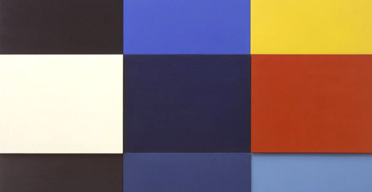
Méditerannée, 1952 - Ellsworth Kelly


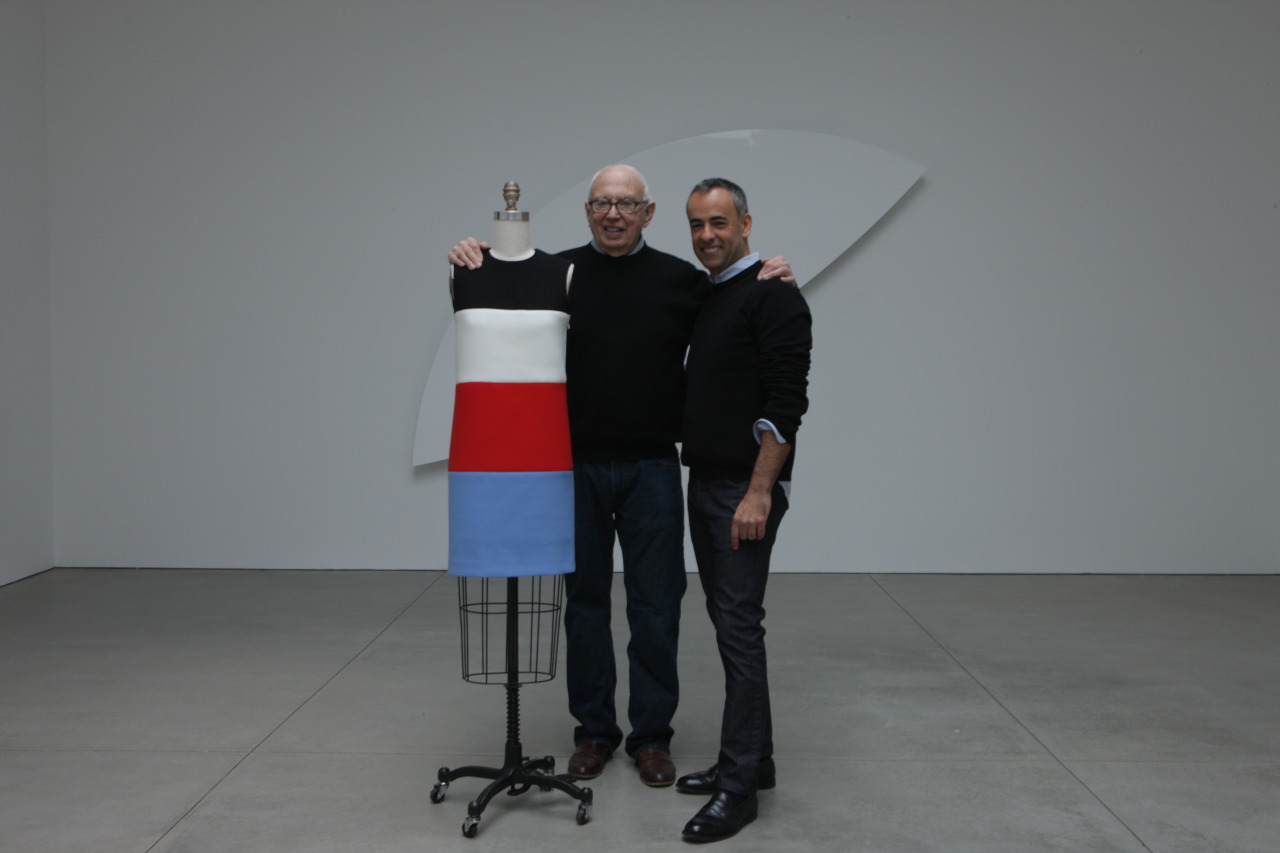
While flipping through the pages of Vogue's latest U.S. issue, I came upon an article about two dresses designed by world-renowned painter Ellsworth Kelly.  The New York Times also features an informative piece on the the Kelly dresses.  As clothing, or as a artwork, I think they are fantastic, and it's also a great opportunity to blog about legal protection in fashion, a topic I just spoke on last week.  The new dress, designed by Kelly and created by Francisco Costa of Calvin Klein is basically a remake of a dress that Kelly originally designed in France in 1952.  Kelly's original dress was made using brightly colored cotton that he purchased in the South of France.  Kelly used some fabric for a five-panel painting in cloth.  He gave the remaining fabric to a friend, Anne Weber, asking her to make the dress to his specifications (although in the end he was very bothered that she left the bottom blue panel so long).  The dresses feature color blocks that evoke Kelly's paintings.


One dress, created in France, and another (presumably) created in the U.S., receive different intellectual property protection.  Clothing designs are allowed far greater intellectual property rights in Europe.  At this point there are two layers of protection, that offered by individual nations and that offered by the EU Directive on Legal Protections in Design.  In France, where the first dress was made, fashion designs are classified as "works of the mind" and enjoy copyright protection.

In the U.S., clothing design receives almost no protection under copyright law because clothing is considered largely inseparable from its utilitarian functions.  U.S. copyright law, loath to protect to utilitarian items therefore only protects things likes original designs on fabric, or possibly non-utilitarin features of costumes.  While some designers are able to bootstrap their way into some level of protection through trademark and trade dress, clothing is largely unprotected and copycats are free to infringe upon new designs.

Only ten of the new Kelly dresses were made.  One was donated to the Metropolitan Museum of Art's Costume Institute, another to the Philadelphia Museum of Art.  With dresses and other clothing items gracing the galleries of some of the nation's premier museums, one would think the U.S. might start seeing fashion a little differently, but the fight to obtain greater intellectual property protection in the United States has been going on for over 100 years.  For the last twenty years, congressional bills seeking to extend some level of limited copyright protection to clothing have regularly been introduced and consistently died in committee, so it does not appear that change is coming any time soon.

Some have remarked that the dresses are so reminiscent of Kelly's paintings, that they really constitute drawings or sculptures, not just ordinary clothing.  Although it might be impractical, I can't help but wonder if these musings could represent an alternative theory for copyright protection of the Kelly dresses in the United States.


Thursday, 7 June 2012

Goodbye Section 52? Proposed copyright extension for industrially produced designs

The iconic Eames chair
will it soon be protected by copyright?
What is art? What is design? Are the two different? Where is the overlap?

These are important and difficult questions which have plagued lawyers, judges and legislators in many jurisdictions not least the United Kingdom. There is currently a Bill passing through the UK parliament which will shake up the current UK approach to copyright for some designs and brings the UK system more in line with the approach taken in the rest of Europe.

Currently section 52 of the Copyright Designs and Patents Act 1988 (CDPA) limits the effective term* of copyright protection to ‘the end of the period of 25 years from the end of the calendar year in which such articles are first marketed’. This limited 25 year copyright term applies where an artistic work has been exploited (by the copyright owner) by making the artistic work by an ‘industrial process’ and marketing the artistic work in the UK or elsewhere.

A number of the gaping holes in section 52 were filled by the snappily titled Copyright (Industrial Process and Excluded Articles)(No. 2) Order 1989. This clarified that an ‘industrial process’ means either (1) the artistic work is manufactured more than 50 times or (2) it consists of ‘goods manufactured in lengths or pieces, not being hand-made goods’. So most furniture, lamps, storm trooper helmets etc are out unless...

...even if made by an industrial process, some items can slip through the section 52 net and get the full copyright term of protection. These special items are: works of sculpture, wall plaques, medals and medallions or printed matter primarily of a literary or artistic character. Unsurprisingly most of the legal battles have been over whether a particular design is a ‘sculpture’. But such battles may no longer be necessary.

[* Technically, the copyright term is not limited but the ability to take action against infringers is removed which is effectively the same thing subject to limited circumstances which are discussed in more detail here.]

The plan is simple: revoke section 52 (see clause 55 of the proposed bill).

How will this work in practice?

In particular what will happen to works which were out of copyright protection is not clear from the bill. There are likely to be some transitional provisions and these works will ultimately be protected by the copyright regime.

Who benefits?

To qualify for the extended term of protection, a work must be artistic in the first place. There is a lot of talk about how British designers will benefit but this will not apply across the board. Some designs may not qualify as not all designs are necessarily artistic. The definition of art in the CDPA is fairly broad but nevertheless restricted to more traditional notions of art. The area most of these items are likely to fall within is a "work of artistic craftsmanship" which unlike paintings etc is not explicitly a work “irrespective of artistic quality”.

Some designs have become iconic over time but were not necessarily always recognised as artistic. The definition of what is artistic has always involved a great deal of subjectivity and unfortunately judicial rulings on what is art may be unavoidable. There are problems and not everyone will benefit. Nevertheless, if the bill is passed it will be another item in the designer’s IP arsenal. Whilst it may not be the huge boost to British business that it is hyped up to be, it will put the UK on a more equal footing with the rest of Europe.

The people who lose out are those that manufacture ‘replicas’. They can choose to move sufficiently far away from the original to not be copying a ‘substantial part’ (a risky strategy) or take advantage of the transitional provisions to sell off existing stock and move business operations to Estonia or Romania (the only other two EU countries to restrict the term of protection for designs).


Is it necessary?


Do we really need more copyright protection? This is a complicated question but there has been a significant disparity in the protection afforded to designers and musicians, writers etc and no real justification for such a major difference in approach. The change may be good for British industry and it will definitely keep some British lawyers busy. Quite apart from subsistence and infringement issues, there are going to be questions over ownership; if the bill is passed those designers who were commissioned (rather than employed) will suddenly own the resurrected copyright in design – not the company which is exploiting the rights and may have to negotiate an expensive licence.

You can track the passage of the bill here.