Showing posts with label design protection. Show all posts

Wednesday, 5 March 2014

Artists v Cody Foster

Hot on the heals of the story of M&S allegedly ripping off the designs of an independent artist, comes a similar tale from the US.

An article by Fast Company details the most recent activities of US company Cody Foster & Co. Most recent, because it seems that this is not the first time Cody Foster & Co. has been accused of copying artists' works.

Indeed, as background to the current story, in the last few years Cody Foster has been regularly accused of selling numerous items on its website which are very similar, if not identical, to the works of several different artists and designers.

Many of these small artists, unfortunately, do not have the resources to bring a legal claim against Cody Foster. Therefore, they have tried to bring the company to account by publicising its actions on the internet and via social media. To some extent this has been successful - with some major retailers ceasing their dealings with Cody Foster. This does not appear, however, to have stopped Cody Foster. In fact, rather than produce their own original pieces, Cody Foster is just trying to suppress the claims against them. The Fast Company reports:
"Accused of ripping off the designs of a number of independent designers late last year, [Cody Foster & Co] is now trying to settle one of the lawsuits that has sprung up in the wake of the allegations. 
...The details of the agreement were initially this: While Cody Foster denied having pirated Smith's designs, Cody Foster was still willing to agree to a license to use Smith's deer antler designs, both retroactively and going forward in perpetuity. In exchange for this license, Cody Foster was willing to pay Smith $650 as long as she submitted to a gag order, which would not only prevent her from talking about the dispute in the future, but which would require Smith to delete any mentions of her dispute with Cody Foster from the web, including tweets, Facebook statuses, blog posts, and more. Smith would also have to acknowledge that she had defamed Cody Foster in the eyes of the company's clients."
In other words, Cody Foster is mainly concerned with cleaning up its online reputation. [Although, I'd argue that it can't be that concerned, considering it was only offering $650.] In any case, whether the artist accepted the settlement or not, Cody Foster still has a way to go. From a quick search on Google for 'Cody Foster', apart from the company's own website, the majority of the results contain references to the copying allegations.

The Fast Company article which provides some excellent detail on Cody Foster's activities, as well as comparisons of artists' designs and Cody Foster's offerings, can be found here.

Source: Fast Company, 5 March 2014 & 18 October 2013

Tuesday, 30 April 2013

The Dresses of Ellsworth Kelly - Considering Legal Protection in Fashion


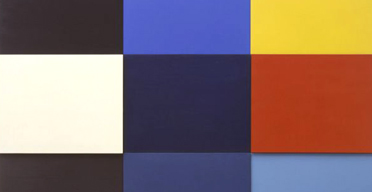
Méditerannée, 1952 - Ellsworth Kelly


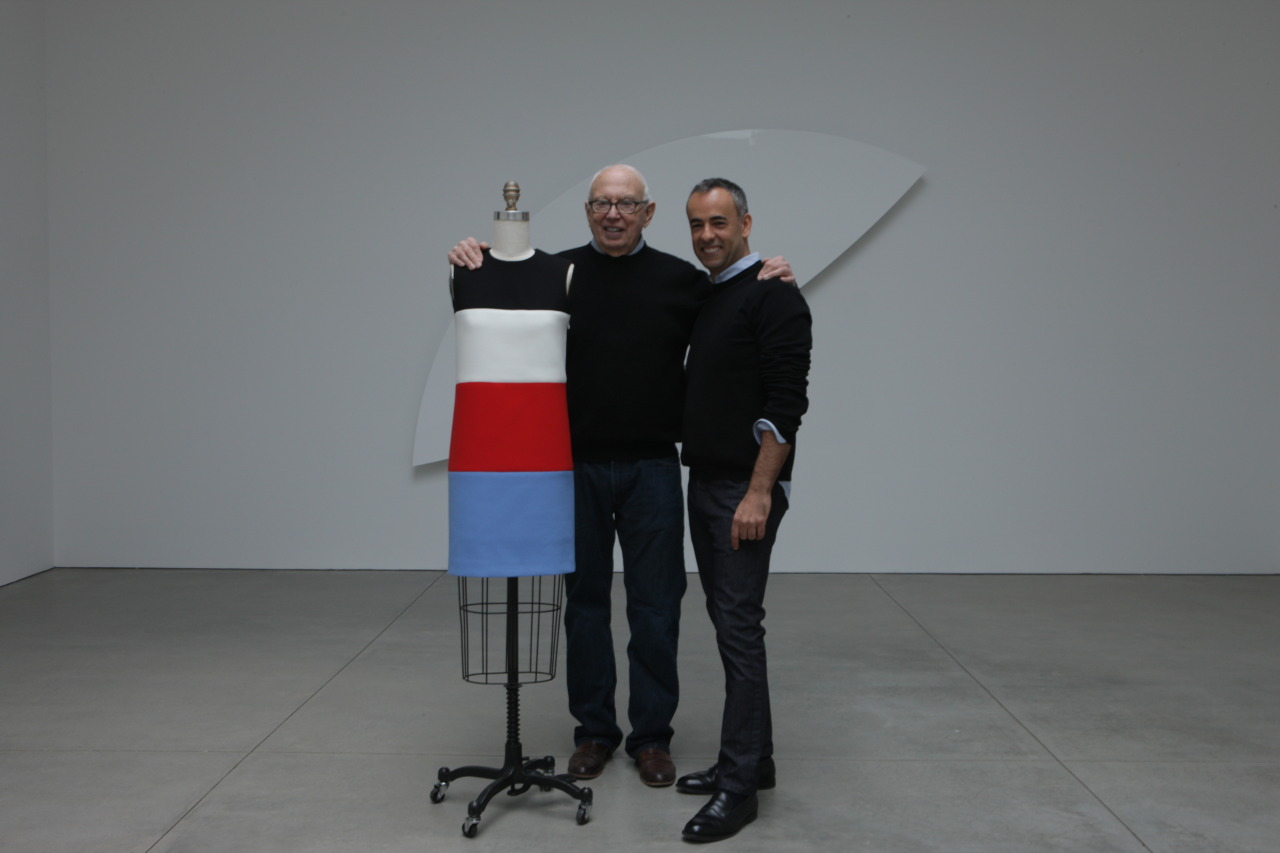
While flipping through the pages of Vogue's latest U.S. issue, I came upon an article about two dresses designed by world-renowned painter Ellsworth Kelly.  The New York Times also features an informative piece on the the Kelly dresses.  As clothing, or as a artwork, I think they are fantastic, and it's also a great opportunity to blog about legal protection in fashion, a topic I just spoke on last week.  The new dress, designed by Kelly and created by Francisco Costa of Calvin Klein is basically a remake of a dress that Kelly originally designed in France in 1952.  Kelly's original dress was made using brightly colored cotton that he purchased in the South of France.  Kelly used some fabric for a five-panel painting in cloth.  He gave the remaining fabric to a friend, Anne Weber, asking her to make the dress to his specifications (although in the end he was very bothered that she left the bottom blue panel so long).  The dresses feature color blocks that evoke Kelly's paintings.


One dress, created in France, and another (presumably) created in the U.S., receive different intellectual property protection.  Clothing designs are allowed far greater intellectual property rights in Europe.  At this point there are two layers of protection, that offered by individual nations and that offered by the EU Directive on Legal Protections in Design.  In France, where the first dress was made, fashion designs are classified as "works of the mind" and enjoy copyright protection.

In the U.S., clothing design receives almost no protection under copyright law because clothing is considered largely inseparable from its utilitarian functions.  U.S. copyright law, loath to protect to utilitarian items therefore only protects things likes original designs on fabric, or possibly non-utilitarin features of costumes.  While some designers are able to bootstrap their way into some level of protection through trademark and trade dress, clothing is largely unprotected and copycats are free to infringe upon new designs.

Only ten of the new Kelly dresses were made.  One was donated to the Metropolitan Museum of Art's Costume Institute, another to the Philadelphia Museum of Art.  With dresses and other clothing items gracing the galleries of some of the nation's premier museums, one would think the U.S. might start seeing fashion a little differently, but the fight to obtain greater intellectual property protection in the United States has been going on for over 100 years.  For the last twenty years, congressional bills seeking to extend some level of limited copyright protection to clothing have regularly been introduced and consistently died in committee, so it does not appear that change is coming any time soon.

Some have remarked that the dresses are so reminiscent of Kelly's paintings, that they really constitute drawings or sculptures, not just ordinary clothing.  Although it might be impractical, I can't help but wonder if these musings could represent an alternative theory for copyright protection of the Kelly dresses in the United States.