Showing posts with label tax. Show all posts

Sunday, 25 January 2015

Not good enough: Spanish government refuses to accept art in lieu of tax in 2014 on quality grounds

The UK has a longstanding tradition of accepting artwork in lieu of tax. The Acceptance in Lieu scheme allows taxpayers to give artwork instead of cash to pay inheritance tax, and the Cultural Gifts Scheme gives breaks on income tax, capital gains tax and corporation tax to those who make lifetime donations of artworks to the nation. The Acceptance in Lieu report for 2014 says that tax of £167 million was foregone in exchange for artworks over the past ten years, £30 million of which relates to 2013-14.

But it is not just the UK which operates such a scheme. The Spanish government too accepts art in lieu of tax – just not last year.

Pablo Picasso's Portrait of Dora Maar, now in the
Reina Sofia in Madrid, was given in lieu of tax
by Spanish bank Caja Madrid in 2005
The Art Newspaper (TAN) reports that in 2014, Spain did not accept any artworks offered in lieu of tax “because the administration did not consider the works submitted as payment to have any artistic value or historic interest to public collections”.

TAN also notes that many of the works submitted in lieu of tax in past years were presented by corporates and banks, in contract to the position in the UK where corporates have only recently been able to make use of such schemes (they can obtain tax breaks under the Cultural Gifts Scheme, which has been in operation only since 2013).

In the absence of any more masterpieces in the basement, it looks as though some Spanish companies may need to start paying tax in the old-fashioned way – in cash. 

Wednesday, 1 October 2014

The quantification of estate taxes: even more obscure than the valuation of art?

A recent decision of the United States Court of Appeals for the Fifth Circuit has been lauded as a victory for art collectors. More accurately, however, it appears to be a victory for the extremely wealthy seeking to avoid paying taxes.

While a lengthy, rather technical, case, it is hoped that the essential elements have been reproduced below.

James A. Elkins, Jr. and his wife collected 64 works of art during their lives. The collection included pieces by Jackson Pollock, Henry Moore, Pablo Picasso, Rene Magritte, David Hockney, Paul Cezanne to name just a few. At the same time, they were thinking ahead, both creating a Grantor Retained Income Trust (GRIT) that held title to their respective interests in the works, and entering into various agreements which also partitioned and allocated their interests in their art.

The result was that at the time of death of Mr Elkins in 2006 (his wife had died in May 1999), the art was jointly owned in varying percentages by Mr Elkins and his three adult children.

In 2007, his children filed a United States Estate (and Generation Skipping Transfer) Tax Return (estate tax return) in which they reported a Federal estate tax liability of over $100million. It listed, among other assets, fractional interests in various items of real and personal property, including the artworks.

In assessing the federal estate tax due on Elkins' estate, the Internal Revenue Service decided that tax should be paid on the full value of the art, refusing a discount based on Elkins' pro rata share—his fractional-ownership interest— of the art.

In 2010, the Executors of the Estate petitioned the United States Tax Court to review the assessment on the basis that there should have been a fractional-ownership discount applied when determining the taxable values of Elkins' fractional interest in the 64 items of art.

The Tax Court rejected the IRS' zero-discount position, but also rejected the quantums of the various fractional-ownership discounts adduced by the Estate through the reports, exhibits, and testimony of its three expert witnesses. Instead, the Tax Court concluded that a “nominal” fractional-ownership discount of 10% should apply across the board to from pro rata fair market value of Elkins ratable share of each of the works of art.

Still unhappy with the decision, the Estate appealed again and the case was heard by the US Court of Appeals for the Fifth Circuit.

The only question to be resolved was whether the federal estate tax due on the artworks was to be calculated based on Elkins' undiscounted pro rata share of the art (as the IRS contended) or should there be a fractional-ownership discount of either (i) a uniform 10% (as held by the Tax Court) or (ii) the various percentages that the Estate advanced through the testimony and reports of its expert witnesses?

The Court found:
  • Just as it was obvious to the Tax Court that the IRS had no viable basis for rigidly insisting that no fractional-ownership discount was applicable, it should have been equally obvious that, in the absence of any evidentiary basis whatsoever, there was no viable factual or legal support for the the Tax Court’s own nominal 10% discount. 
  • The Estate was entitled to apply a fractional-ownership discount to the tax due on Elkins' ratable share of the each of the 64 works of art. 
  • The answer to the question of the correct quantum was to be found with the proper administration of the willing buyer/willing seller test for fair market value: 'the price at which the property would change hands between a willing buyer and a willing seller, neither being under any compulsion to buy or sell and both having reasonable knowledge of relevant facts.'
  • The Estate's evidence was that the sale of Elkins' undivided interests in the artworks would produce prices substantially below his pro rata share of the works as any hypothetical willing buyer would demand significant fractional-ownership discounts in the face of becoming a co-owner with the Elkins descendants (given their financial strength and sophistication, their legal restraints on alienation and partition, and their determination never to sell their interests in the art).
  • The correct quantums of the fractional ownership discounts applicable to Elkins' pro rata share of the various artworks were those determined by the Estate’s experts. 

The full list of the 64 artworks and the discounts can be found in Appendix B to the Tax Court’s decision. The discounts range from over 50% to just under 80%. A substantial difference from the Tax Court's nominal 10% discount. As a result, the Court ordered a refund payment to the Estate of $14,359,508.21, plus statutory interest, for overpaid taxes.

While apparently "nothing is certain except for death and taxes," you could add to that the certainty that those with enough money will seek to avoid both. And that, in itself, is an art form. But that is just a [reckless] opinion....what do you think?


Source: Forbes, 24 September 2014

Tuesday, 25 March 2014

Henderskelfe Round 2: Still no tax to pay on Reynolds' portrait of Omai

A year ago I reported on the case of Henderskelfe, in which the Upper Tribunal for tax announced an apparently odd decision: that an iconic portrait by Sir Joshua Reynolds, which had been sold for £9.4 million, was a “wasting asset” and that the sale proceeds were therefore exempt from capital gains tax.

The painting’s owners were saved a fortune. HMRC was not pleased, and appealed. More bad news for HMRC: the Court of Appeal’s decision, announced last week, agreed with the Upper Tribunal’s previous judgment and dismissed the appeal.

Sir Joshua Reynolds' Portrait of Omai, c.1775
Briefly, the reasoning behind the Upper Tribunal’s decision of last year was as follows. Since 1952, Castle Howard – the ancestral home of the painting’s owners - had been open to the public as a business. From 1952 until its sale the painting was on display in the Castle for the public to see. As a famous painting, it was one of the Castle’s attractions. The painting was therefore in the nature of “plant” – that is, an object retained and used for the purposes of a trade. Anything in the nature of “plant” is automatically deemed by the capital gains rules to be a “wasting asset”, and in turn wasting assets are exempt from capital gains tax. (See last year’s report for more detail.)

HMRC’s arguments that this exemption did not cover the painting were rejected by the Court of Appeal. The Court pointed out that, despite the fact that the painting was clearly not in any factual sense a “wasting” or depreciating asset (quite the opposite), it nonethless passed the tests set out by case law to be “plant” and as a consequence was clearly deemed by the capital gains tax rules to be a “wasting asset” for tax purposes. 

The Court also pointed out that the rules which exempt wasting assets from capital gains tax are not intended to be a generous measure allowing the "very occasional gainer from the disposal of a wasting asset to keep the gain tax-free”. By definition, wasting assets will normally be sold at a loss. Take a common example of a wasting asset: an ordinary car. On sale, its owner will almost certainly make a loss, not a gain. But since the car is exempted from capital gains tax, any gain on the sale would not be a chargeable gain, and – crucially – neither is any loss an allowable loss. In other words, the rules prevent the sellers of wasting assets from creating allowable losses which they could use to reduce any tax payable on other chargeable gains made during the year.

The present case is just one of those rare occasions when these normally HMRC-friendly rules work in the taxpayer’s favour.

Wednesday, 12 February 2014

More artworks discovered in Austria

Back in November 2014, the discovery of a trove of hundreds of art masterpieces in an apartment in Munich made headlines around the world.

As we explained here, the trove was found by German authorities investigating Cornelius Gurlitt, the 81 year old son of Nazi-era art dealer Hildebrand Gurlitt. Upon entering Gurlitt's apartment, the authorities discovered the artworks, including some believed to have been looted by the Nazis.

It is now being reported that yet more pieces were discovered in a second home belonging to Gurlitt.

The Telegraph reports:
Officials investigating the secret Nazi-era art cache hoarded by an elderly German art collector are examining a second stash of paintings found at another of his addresses. 
Cornelius Gurlitt, who kept around 1,400 works at his apartment in Munich, also had around 60 pieces in a flat in the Austrian city of Salzburg, it was disclosed. 
...
The works were secured on Monday and were being examined by experts at Mr Gurlitt’s request to establish whether any of them had been looted by the Nazis, said [Mr Gurlitt’s spokesman, Stephan Holzinger].

“At the request of Cornelius Gurlitt, the works are being examined by experts on whether they include possibly stolen art,” he said. “A preliminary assessment based on an initial screening did not substantiate such a suspicion.”

Source: The Telegraph, 11 February 2014.

Thursday, 2 January 2014

Tax exempt artworks: a "racket in urgent need of reform"?

“A little known art and heritage tax exemption scheme designed to allow the British public access to a treasure trove of privately owned works has been described as a racket in urgent need of reform,” the Guardian has reported.

The “racket” in question is the “conditional exemption” scheme, which allows owners of certain cultural objects (those designated as being pre-eminent for their national, scientific, historic or artistic interest) exemption from inheritance and capital gains tax, so long as they abide by three conditions. Broadly, those conditions are to keep the object in the UK, to keep it in good physical condition, and (most controversially) to allow the public access to that object.

The Guardian reports that Rossetti's A Christmas Carol was
conditionally exempt prior to its sale at Sotheby's

The scheme’s aim is to ensure that a person inheriting such an object isn’t forced to sell it – possibly to a non-UK buyer – in order to pay the inheritance tax bill. It allows the individual to keep the object and gives the nation access to it at the same time, so everybody is meant to win.

But the Guardian writes that the scheme is “patchy at best”. Its research suggests that, in practice, gaining access to these objects can be tricky due to their existence being listed only in a “rarely publicised database” (to access the database click here) and due to owners who may demand identification prior to allowing viewings, offer inconvenient viewing dates, or simply fail to respond to viewing requests at all. In addition, the Guardian notes that the scheme has cost the UK “more than £1bn” in forgone tax over the past few decades.

“The scheme is not working,” shadow culture minister Helen Goodman is quoted as saying, with access obligations being “incredibly small” at “no more than 28 days per year”. She also believes that “there should be a requirement to lend works to public museums and galleries”.

However, the article doesn’t mention that 28 days’ access is normally a minimum (rather than a standard) condition, and - despite Goodman's comments that owners deliberately arrange awkward viewing times to keep visitors away - access during those days must be without the need for an appointment (although exemptions granted prior to1998 may still provide for access by prior appointment only).

Nor does it mention that in most cases HMRC already requires “willingness to make loans to public collections”, or that owners who fail to stick to the conditions are liable to lose the their exemption and pay their tax bill. (Contact details to alert HMRC about difficulties accessing objects can be found here.)

The Guardian’s investigation shows that the scheme is by no means a perfect system, and some may argue that taxpayers’ funds could be more efficiently employed. But the scheme does at least provide opportunities for owners to retain their important art or cultural objects while offering some degree of public access, as an alternative to such objects passing into the entirely private hands, whether in the UK or abroad, of those who can afford to buy them. And those rights of public access are rather broader than Goodman appears to think.

Tuesday, 12 November 2013

Jean-Michel Basquiat's family sue the IRS

The late Jean-Michel Basquiat’s paintings don’t come cheap. But are they quite as expensive as the US Internal Revenue Service (IRS) thinks they are?

When the artist himself died at just 27 in 1988, his estate went in equal parts to his parents. Twenty years later when Basquiat’s mother died, she still held a huge collection of his artwork. The family had it valued and paid up US$8.5m in taxes on her estate – a sum not to be sneezed at – but the US tax authorities claim it’s considerably less than they ought to have paid. The IRS has determined that the family undervalued the collection by US$66m, and accordingly still has an outstanding tax liability of nearly US$10m (including penalties for late tax returns and undervaluing assets).

Now the artist’s family are taking the tax authority to court, arguing that the new valuation is far too high. The IRS has been known to exercise what some might describe as poetic licence when valuing art (such as the case of the legally unsaleable Rauschenberg valued at US$65m). But how did a difference of opinion on this scale come about?

The key to the huge discrepancy is explained by the fact that the IRS’s valuation does not take account of the “blockage discount” claimed by the Basquiat family. In the art world, this term refers to a discount which may be claimed by an art-rich estate on the basis of the devaluation which could occur if that estate sold all its art holdings at once. If the market is flooded with a particular artist’s works, the likelihood is the estate won’t get the same value as it would have done had the works been sold one by one.

Probably, any discount allowed will be lower than that claimed by the family, but the outcome of the case remains to be seen. In the meantime, anyone looking for a cheap Basquiat may want to keep an eye on the market.

Source: www.dnainfo.com

Tuesday, 13 August 2013

French tax credit for art buyers proposed

The French like their art.

Last year, a government proposal to subject artworks to France's existing wealth tax in a bid to help reduce the budget deficit (reported on Art and Artifice here) was shot down in flames amidst argument that if the new rule was passed, art collections would flood out of the country and owners would refuse to lend to exhibitions. 
 
This month the Art Media Agency (AMA) reports that the French opposition party have presented a draft law intended to have the opposite effect - to encourage French tax payers to invest in art. If passed, the law would create a tax credit for individuals who purchase “artefacts, collector's items, and antiques, within an annual limit of €1000, and a maximum of 80% of the total price paid offered” - so that the maximum tax credit per person per year would be €800.

Not much in there for under  €1000


However, it's not all goods news. AMA reports that in order to make up the revenue shortfall created by the tax credit, "those behind the law proposed an increase on the tax applicable to the sale of precious metals, jewellery, artefacts, and antiques".

Wednesday, 29 May 2013

The art of dodging

It appears that the law has finally caught up with a New York art dealer after a lengthy period of dodgy behaviour.

Glafira Rosales was charged this month with evading payment of millions of dollars in tax on income she earned from the sale of fake artworks.

A press release from the US Attorney's office for the Southern District of New York explains that:
[Rosales was arrested] for filing false tax returns and for failing to disclose a foreign bank account to the IRS. Rosales allegedly failed to report the receipt of at least $12.5 million in income from the sale of works purported to be by celebrated abstract expressionist artists. Most of the income was received in a bank account in Spain that Rosales hid from, and failed to disclose to, the IRS.
So not only did she manage to pull the wool over the IRS' eyes, but she managed to fool the art world with her forged artworks - and for a significant period of time. Indeed, Manhattan U.S. Attorney Preet Bharara said:
As alleged, Glafira Rosales gave new meaning to the phrase ‘artful dodger’ by avoiding taxes on millions of dollars in income from dealing in fake artworks for fake clients...”
A painting sold by Rosales as an original Pollack
According to the Complaint:
Rosales began selling several never before exhibited and previously unknown paintings in the 1990s, which she claimed to be by some of the most famous artists of the twentieth century, such as Jackson Pollock, Mark Rothko, and Willem de Kooning. From 2006 through 2008, the proceeds of her sales of such paintings to two prominent Manhattan galleries were over $14 million. In selling most of the paintings to the two galleries, Rosales purported to represent a client who had inherited the paintings and wanted to sell them, but who also wished to remain anonymous. For the remainder of the paintings, she purported to represent a Spanish collector. Rosales further claimed that a portion of the price paid by the Manhattan galleries was a commission to her for selling the paintings, and that the remainder would be passed along to her clients. 
However, the investigation revealed that:
  • experts in the fields of art, art history, and materials science concluded that at least several of the paintings sold by her are counterfeit;
  • the client on whose behalf she purported to sell most of the paintings to the Manhattan galleries never existed;
  • the Spanish collector on whose behalf she purported to sell the remainder of the paintings to the Manhattan galleries never owned the paintings;
  • instead of passing along a substantial portion of the proceeds of the sale of the various paintings, she kept all or substantially all of the proceeds, and transferred substantial portions of the proceeds to an account maintained by her then-boyfriend; and
  • Rosales then filed tax returns claiming that she had not kept all, or substantially all of the proceeds from the sale of the paintings. She also kept most of the proceeds in a foreign bank account that she hid from, and failed to report to, the IRS.
Unfortunately for Rosales, it seems the scheme was not fool proof after all. As IRS Special Agent-in-Charge Toni Weirauch explained: “The sale of a piece of art for profit is a taxable event and the seller is responsible for paying his or her fair share of tax, even if the art is counterfeit."

Rosales now faces some lengthy prison time if convicted on all counts.

See the full complaint here.

Tuesday, 19 March 2013

Sir Joshua Reynolds' portrait of Omai is a 'wasting asset'

The Upper Tribunal has announced that Sir Joshua Reynolds' famous portrait of the South Sea Islander Omai, sold in 2001 for £9.4m, is a 'wasting asset' - and accordingly, that no capital gains tax is payable on the proceeds.

However did they work that one out?

Before its sale, the painting was on display in Castle Howard. The castle had been owned since 1950 by a company which ran a business exhibiting the castle and grounds to the public. But the painting itself was owned by Lord Howard and, at his death in 1984, passed to his estate. First Lord Howard, and later his executors, allowed the company to exhibit the painting on an informal basis, with no lease or licence for its use in place. 

Following the portrait's sale in 2001, the executors stated that no tax was payable on the sale proceeds. This, they argued, was because the painting fell into the definition of 'plant and machinery' (or more specifically, plant) for the purposes of section 44 of the Taxation of Capital Gains Act, which in turn meant that it was automatically deemed to be a 'wasting asset' under section 44 - and wasting assets are not subject to capital gains tax. 

This argument failed in the First Tier Tribunal (tax). The executors appealed in the Upper Tribunal. 

Surprising as it initially sounds, the higher tribunal agreed with the executors' reasoning. There is no statutory definition of 'plant', and so in determining whether the painting was plant the tribunal considered tests set down in case law. These tests required that to be plant, the painting must satisfy:

(1) the 'function test' - i.e. it must be used for the purposes of the trade carried on by the company; and
(2) the 'permanence test' - i.e. it must have a sufficiently permanent place in that trade (this test prevents trade stock falling into this definition).  

The Tribunal held that painting was used in the company's trade. It was one of the attractions of the castle and helped bring in visitors. And whilst not owned by or formally leased to the company, it had been displayed in the castle on an indefinite basis and had in fact been in situ from 1952 to 2001. This was deemed to satisfy the test of permanence. 

HMRC's main argument against the idea that the painting was plant was based on the fact that the painting was used in the company's trade, while the painting itself was owned not by the company but by the executors - so that the painting was not plant in the executors' hands, and capital gains tax was therefore payable. But the tribunal held that the painting, having satisfied the two tests, was plant; the legislation did not permit a finding that it could be plant in one party's hands and not in another's. 

In short, odd as the conclusion seems at first sight, Reynolds' Omai was indeed a wasting asset for capital gains tax purposes and the lucky executors had no capital gains to pay. Anyone selling a valuable artwork which has been used for business purposes (whilst not being stock) may be interested to learn of this wide definition of 'plant' and the unexpected results to which its application may lead. 

Thursday, 14 March 2013

More UK tax breaks

Last month I reported on the UK government's 'acceptance in lieu' (AiL) scheme.

This week, the Department for Culture, Media and Sport (DCMS) launched the "Cultural Gifts Scheme." The Scheme, which will be administered by the Arts Council, will allow UK taxpayers who own art or collections of heritage objects, which are considered to be pre-eminent, to be donated during their lifetime (rather than after their death, as with the AiL scheme) in return for a tax reduction to their tax liability.

Culture Minister Ed Vaizey has said of the scheme that it "is aimed at encouraging gifts and donations of wonderful treasures to the nation, where they can be enjoyed by all."

How will it work?

A UK taxpayer who owns an artwork which is considered pre-eminent, can offer to donate the work to the Arts Council. The offer will be considered by the AiL Panel (the “Panel”). If the Panel considers that the object is pre-eminent and meets the relevant conditions, they will agree a valuation and then make a recommendation to the relevant Minister (either the Secretary of State for Culture, Media and Sport, the Welsh Ministers, the Scottish Ministers or the Northern Ireland Department for Culture, Arts and Leisure). If the relevant Minister agrees with the recommendation, the object will then be allocated by the appropriate Minister to an eligible museum or gallery. Alternatively, where an offer is made with a wish that the artwork be allocated to a particular institution, the Minister can agreed to the allocation and the object will be transferred to that institution. If the Panel assesses an object as not being pre-eminent, it will be rejected. There will also be an annual limit of £30 million for both the Cultural Gifts Scheme and AiL Scheme. The Panel may also reject a donation where acceptance would cause the annual limit to be exceeded.

Upon formal acceptance of a donation, the Arts Council will send confirmation of the donation to HMRC. HMRC will not apply the tax reduction to a person’s tax liability unless and until the Panel has confirmed to HMRC that the relevant conditions for the tax reduction have been met. The tax reduction will only be available against the income tax and capital gains tax liabilities of individual donors or against the corporation tax liability (including liabilities on chargeable gains) of corporate donors.

DCMS have produced detailed practical guidance on how to make an application under the Cultural Gifts Scheme. This can be found here.

Monday, 4 February 2013

Tax avoidance for all

With David Beckham being lauded for his savvy tax dodging you may be forgiven for thinking that famous footballers have a monopoly on tax avoidance. Not so.

Also reported today is the news that artist Lucian Freud, who died in July 2011, bequeathed artworks by Corot and Degas in his will to the state under the government's 'acceptance in lieu' (AiL) scheme. Under the scheme, people can offer items of cultural and historical importance to the state in full or part payment of their inheritance tax, capital transfer tax or estate duty. The scheme is said to offer clear tax benefits to owners as items are generally worth 17 percent more if offered in lieu of tax than if sold on the open market at the same price, because tax must be paid on the amount an object is sold for. Once accepted, the works are distributed to museums, galleries and public archival depositories throughout the UK. Thus, in this instance, the Corot works are said to be going to the National Gallery, while the Degas works are to be displayed at The Courtauld Gallery.

So, you don't have to be a famous footballer to get a tax break....being a famous artist is just as good.

More details of the AiL scheme can be found here.

Source: BBC, 4 February 2013

Saturday, 8 September 2012

The Stripper and the Taxman: Sexy, but is it Art?


A New York strip club is making headlines with a valiant attempt to avoid paying a rather large tax bill.

The club, named Nite Moves, advertises itself as 'the only gentleman's club in Albany with fully nude private dancers' and is being charged back taxes of between US$125,000 and US$400,000 according to differing sources. But it argued in court this week that its dancers' performances are an art form, and as such the club should be tax exempt. New York state law does indeed exempt revenue from 'dramatical [and] musical arts performances' from tax. But does lap- and pole-dancing qualify?

Nite Moves' attorney, adult industry specialist Andrew McCullough, presented a spirited argument in court that it does. 'It's not the Bolshoi [ballet], but it's good,' he said in praise of the club's dancers, going on to point out that pole dancing is under consideration as an Olympic sport. The judge appeared to disagree; the Associated Press reported him as commenting that the dancers are hired untrained and simply 'do what they do'. State law adds that exotic dancing does not qualify as an arts performance because it is not firmly choreographed.

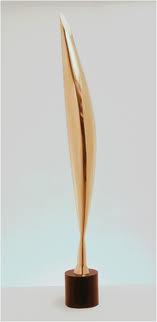
The law, when asked to define art (often for tax purposes), frequently struggles and sometimes finds itself behind the times. Famously, when Brancusi's bronze Bird in Space was imported into the USA in 1928, it was initially deemed not an artwork but a utilitarian object and 40% import duty was charged on the value of the bronze. As a sculpture it could have been freely imported. However, 'sculpture' was defined for import purposes as representing something real, while Bird in Space was abstract: it didn't actually look like a bird. More recently the EU has held that full VAT (rather than the reduced rate for artworks) was chargeable on works by Dan Flavin and Bill Viola when they were imported into the UK. As the pieces' components were light bulbs, video equipment and other such materials, the EU felt they couldn't be deemed 'art'.

Brancusi's Bird in Space
The arguments raised on both sides in the Nite Moves case as to why exotic dancing is or is not 'art' are illustrative of the difficulties faced when making such a decision; some of them seem only tenuously linked to the question in hand. Why should the fact that the club's dancers are hired untrained, or that pole dancing may become an Olympic sport, make their dancing any more or less an art form? Is a painter less an 'artist' because he or she has not been formally trained? Or is the 100 metre sprint an art form because it's an Olympic sport? Again, is lap dancing less an art form because it may also be considered erotic? On this last point it's interesting to recall that ballet, once considered a dubious profession, today enjoys unassailable status as highbrow art.

The court in the Nite Moves case does not have an enviable task in trying to answer the unanswerable question: What is art? So far as exotic dancing goes, the jury is still out. A decision is expected next month.

Read more in the Huffington Post, the Telegraph and the BBC News.